
Critique 307 – Associations between beer, wine, and spirits consumption and major mortality outcomes in 187,294 Norwegian men and women, with a focus on low-level wine intake
Tverdal, A., Selmer, R., Thelle, D.S.
Scandinavian Journal of Public Health, (2026) 1–8
https://doi.org/10.1177/14034948261459749
Abstract
Aims: To examine how consumption of wine, beer, and spirits—both individually and in combination—is associated with mortality. We also assessed the relationship between overall alcohol intake and mortality from cardiovascular disease, ischemic heart disease, cancer, and alcohol-related diseases.
Methods: A cohort of 187,294 men and women aged 16–99 years (10th percentile 36 years, 90th percentile 52 years), without cardiovascular disease or cancer, were followed for an average of 21 years, with 15,642 deaths. The participants completed a cardiovascular health survey and a questionnaire reporting their consumption of beer, wine, and spirits over the preceding 14 days. Mortality outcomes were assessed using absolute mortality rates, calculated with the direct method, and hazard ratios, adjusted for major cardiovascular risk factors, estimated with Cox proportional hazards models. Non-drinkers served as the reference group.
Results: For all-cause death in men and women combined, the hazard ratio was 0.91 (95% confidence interval: 0.88–0.94) for 1–9 glasses/14 days of alcohol, 1.01 (0.96–1.07) for 10–19 glasses, and 1.44 (1.32–1.57) for 20+ glasses versus non-drinkers. Corresponding hazard ratios for ischemic heart disease death were 0.86 (0.77–0.97), 0.82 (0.68–0.98), and 1.09 (0.83–1.43), and for alcohol-related deaths 1.63 (1.07–2.49), 4.47 (2.85–7.02), and 13.0 (8.11–20.8). Low wine consumption alone, or combined with low beer or spirits consumption, was associated with hazard ratios of 0.84 (0.78–0.89) to 0.90 (0.84–0.97). Combinations without wine showed hazard ratios ranging from 1.00 (0.95–1.06) to1.06 (1.00–1.13).
Conclusions: Low wine consumption was associated with lower mortality than no alcohol consumption, irrespective of low beer or spirits consumption.
ISFAR Summary
Tverdal et al. (2026) provide further evidence of beneficial associations between low alcohol consumption and major mortality outcomes, including mortality from cardiovascular disease, ischaemic heart disease, cancer, and alcohol-related diseases. This study benefits from an exceptionally large cohort (187,294 participants) and more than two decades of follow-up. However, the reported beverage-specific effects may be confounded by unrecorded factors that were not accounted for, such as smoking intensity and duration, diet, drinking pattern, and socioeconomic variables.
The authors discuss findings from Mendelian Randomisation (MR) studies but do not discuss short-term intervention studies that show physiological changes which may explain how alcohol and wine consumption reduce the incidence of ischaemic heart disease. The genetic markers used in MR analyses explain only a very small portion of the variation in drinking habits and do not assess the impact of binge drinking.
Overall, the authors present a balanced interpretation of their findings, acknowledging the limitations of both observational and MR evidence and appropriately avoiding strong causal conclusions.
Although Forum member Thelle is one of the authors of this paper, neither he nor any of his colleagues contributed to this Forum critique.
Background
Alcohol consumption and its associations with disease and overall mortality are still extensively and intensely discussed. This study by Tverdal et al. (2026) describes a J-shaped association between alcohol consumption and overall mortality and mortality from major diseases. A “J-shaped curve” is a term for an association in which disease risk or mortality is lower among light and moderate drinkers than among abstainers, but higher among heavy drinkers.
ISFAR has discussed the J-shaped association several times (e.g., ISFAR critiques #252, #217 and #124), illustrating the difficulties of epidemiological comparisons between drinkers and non-drinkers. The J-shaped curve has been discredited due to claims that many studies include “sick quitters” in their reference group (Fillmore et al., 2007). However, epidemiologists have known for decades that including ex-drinkers in the referent group when evaluating the health effects of alcohol is an error; such a group cannot be used for comparisons with moderate drinkers. Critics, however, ignore the most recent cohort studies that show J-shaped associations, using lifetime abstainers as the referent group (e.g. Di Castelnuovo et al., 2022), in which former drinkers were separated from lifetime abstainers (e.g. Masum et al., 2022; Muraki et al., 2023; Patra et al., 2021), or in which alcohol consumption measures were assessed as lifetime alcohol use (e.g. Kunzmann et al., 2018). Some studies failed to produce a J-shaped curve because of a very small reference group of lifetime abstainers (e.g. John et al., 2021) (ISFAR critique #252), a low-volume drinking reference group (e.g. Sun et al., 2022), or the inclusion of older studies that did not distinguish between former drinkers and lifetime abstainers (e.g. Zhao et al., 2023).
Attempts to discredit the J-shaped curve may stem from the harmful burden of excessive and hazardous alcohol consumption on human health (Dai et al., 2026). Public health researchers emphasise that every drop of alcohol carries health risks, often expressed as an increased risk of cancer. However, as in any biological system, detrimental effects co-exist with beneficial effects, resulting in a balance with an optimum, which may be best represented by all-cause mortality, a measure of all known and unknown causes of death. Therefore, all-cause mortality should be considered one of the most important, if not the most important, health outcome measures.
The Tverdal study (Tverdal et al., 2026) from the Norwegian Institute of Public Health reports not only on alcohol consumption and all-cause mortality, but also on other major health outcomes, including cardiovascular disease, cancer, other diseases and alcohol-related mortality. The association with overall mortality is consistent with previous literature, and the associations with cardiovascular disease, ischaemic heart disease and stroke are J-shaped. In addition, the association with alcohol-related mortality is positive at all consumption levels. Alcohol consumption and cancer mortality show no association at lower consumption levels, but increase at higher levels of alcohol consumption. All these observations are well in line with the majority of epidemiological studies on alcohol and disease outcomes.
In addition, the Tverdal study (Tverdal et al., 2026) addresses another important issue in the epidemiology of alcohol consumption and health; does the type of beverage make a difference in health outcomes? The authors conclude that low wine consumption was associated with lower mortality than no alcohol consumption, irrespective of low beer or spirits consumption, because a J-shaped association was found between alcohol consumption and the risk of all-cause death, which was particularly associated with wine consumption. Although these findings align with epidemiological observations, they should be interpreted with caution in light of Mendelian Randomisation evidence challenging a causal cardioprotective effect of moderate alcohol consumption.
Critique
Tverdal et al. (2026) address several issues in alcohol and health epidemiology in a relatively concise study of almost 200,000 Norwegian men and women aged 16 to 99 years, who were followed for an average of 21 years. This length of follow-up provides sufficient time for major mortality outcomes to develop and represents an important strength of the study. In addition, because nearly 16,000 deaths occurred, the statistical precision of the HRs is much better than in many cohort studies. The authors conducted a sensitivity analysis excluding deaths occurring during the first three years of follow-up, and the findings were essentially unchanged. Although this cannot rule out reverse causation, it strengthens confidence that the observed associations are not driven solely by participants with undiagnosed illness at baseline.
Alcohol consumption was assessed using a questionnaire that asked about beer, wine and spirits consumption, expressed as glasses over the preceding 14 days. This assessment of alcohol intake raises several issues. First, the term ‘glasses’ was not defined, and the authors were therefore unable to convert alcohol consumption into grams of alcohol, the standard way of expressing alcohol consumption in alcohol epidemiology. Second, the question concerned the preceding 14 days, which does not establish that those who report drinking no alcohol are absolute teetotalers or lifelong abstainers. The authors also acknowledge that alcohol consumption was measured only once at baseline. Given the average follow-up of 21 years, changes in drinking behaviour over time are inevitable and may have led to exposure misclassification, which would generally be expected to attenuate rather than exaggerate the observed associations. The authors argue that the lack of a J-shaped association between alcohol consumption and alcohol-related causes of mortality in our study suggests that any sick-quitter effect is not due to alcohol-related causes. This, in combination with the exclusion of all individuals with a self-reported history of myocardial infarction, angina pectoris, stroke, and diabetes, as well as those previously diagnosed with cancer according to data from the Cancer Registry of Norway, makes a considerable sick-quitter effect unlikely. The exclusion of these prevalent diseases also substantially reduces reverse causation.
Although the data were adjusted for numerous confounders, namely age, smoking status (yes/no), total cholesterol, triglycerides, body mass index, systolic blood pressure, educational level, physical activity, and marital status, smoking was modelled only as a binary variable (yes/no), despite substantial differences in smoking prevalence across alcohol consumption groups. This leaves considerable potential for residual confounding due to smoking intensity, duration, pack-years, and former smoking status. Furthermore, no adjustments were made to account for diet quality. This lack of information may not only affect the alcohol-all-cause mortality association, as the authors note, but also the observations regarding the more beneficial mortality associations with wine consumption. Danish studies (Gronbaek et al., 1995) have previously shown that wine consumption is more favourably associated with mortality than beer and spirits consumption, which was attributed to the better diet of wine consumers compared with those drinking beer and spirits (Johansen et al., 2006; Tjønneland et al., 1999). Residual confounding may also extend beyond diet, as wine consumption is often associated with a broader pattern of healthier lifestyles and socioeconomic characteristics. Klatsky et al. (1990) demonstrated that wine drinkers were more likely to be better educated, non-smokers, and generally healthier than consumers of beer or spirits, suggesting that these correlated behaviours may contribute to the more favourable associations observed with wine consumption. Also, Figure 1 (shown below), which illustrates the authors’ conclusion that low wine consumption is associated with lower mortality, seems convincing.
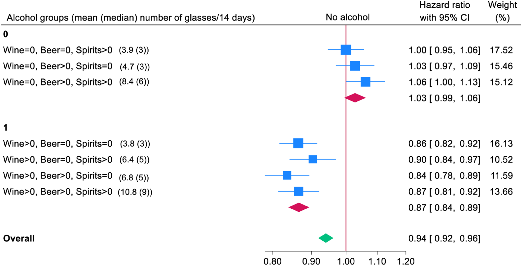
Figure 1. Hazard ratios for all-cause mortality according to alcohol consumption (wine, beer, and spirits) over a 14-day period.
Indeed, those who drink only beer or only spirits, or beer and spirits, show no reduction in all-cause mortality, whereas those who drink only wine, or wine in combination with beer or with spirits, or with beer and spirits (with the highest number of glasses over the preceding 14 days) have reduced all-cause mortality. The relatively similar hazard ratios observed across the wine-containing groups suggest that wine consumption may be a marker of correlated lifestyle behaviours rather than indicating a specific biological effect attributable to wine itself. Possibly, additional factors associated with drinking wine affect this association. These factors may include drinking pattern, such as binge drinking, drinking frequency, or drinking with meals; diet (mentioned earlier); and interactions with smoking or others.
The authors discuss findings from Mendelian Randomisation (MR) studies, which show no robust protective effect against ischaemic heart disease. The authors did not include any MR data in their analysis but suggest that MR may strengthen causal inference. Unfortunately, the authors did not discuss short-term intervention and epidemiological studies showing physiological changes that may explain how alcohol and wine consumption reduce the incidence of ischaemic heart disease. These changes include increased HDL cholesterol accompanied by increased reverse cholesterol transport, improved glucose homeostasis as shown by a decrease in HbA1c, and a reduced clotting tendency due to lower fibrinogen levels (Mukamal et al., 2005).
In conclusion, this study provides further evidence of beneficial associations between low alcohol consumption and major mortality outcomes, but the reported beverage-specific effects may be confounded by unrecorded factors that were not corrected for. Overall, the authors should be commended for presenting a balanced interpretation of their findings, acknowledging the limitations of both observational and MR evidence, and for appropriately avoiding strong causal conclusions.
Specific member comments
Forum member Ellison considers this to be a “well-done, straightforward analysis of very well collected data on a large, population-based cohort of Norwegians. The sources of outcome data were from the excellent records kept by the government in Norway.
As others have noted, the results strongly support extensive previous research indicating a ‘J-shaped curve’ between the consumption of alcoholic beverages, especially wine, and cardiovascular disease and total mortality. Other reviewers have emphasized effects partly attributable to the healthy lifestyle factors associated with regular wine consumers (wine with food, on a regular basis, less binge drinking, less tobacco use, better diet, etc.), but we must also recognise that the non-alcoholic constituents of wine are important, as even when evaluated without alcohol, they improve many of the risk factors for cardiovascular disease (Teissedre et al. 2018).
I tend to be annoyed that many authors focus so much on the differences between most epidemiological analyses and Mendelian Randomisation (MR) research on alcohol and health (Ellison et al., 2021). As noted repeatedly, current applications of MR are based on good data on genetic factors but place little, if any, emphasis on the important lifestyle factors that determine alcohol use. These include the effects of religious and cultural factors within a given population, the extent to which prohibition is the accepted approach within a community, the acceptance or non-acceptance of drunkenness, and the drinking habits of peers on young people’s own drinking habits, etc.
Further, Holmes et al. (2014) (their reference 24), which is frequently quoted, has been widely criticised for reaching false conclusions based on the authors’ own data. A number of scientists listed as authors sent in strong complaints about the conclusions in earlier drafts of the paper, but they were disregarded (Rehm et al. 2015). Indeed, Rehm et al. (2015) argued that genetic markers, specifically ADH1B, confound average alcohol volume with drinking patterns, failing to isolate the specific impact of binge drinking. They contend this limitation obscures the J-shaped cardiovascular curve by aggregating distinct consumption behaviours into a single, misleading linear metric. Furthermore, I was erroneously listed as a coauthor of Holmes et al. (2014). There are many other good papers on MR that should be used to judge its role in evaluating the relation of alcohol to health.”
Forum member Romano remarks that “although this study benefits from an exceptionally large cohort (187,294 participants) and more than two decades of follow-up, important methodological limitations weaken the inference that low wine consumption independently reduces mortality. Variable participation rates (40–80%) introduce potential selection bias, and excluding participants with cardiovascular disease, diabetes, or cancer produced a particularly healthy cohort that may not be representative of the general population.
The age range (16–99 years) is highly heterogeneous. Although age was included in the Cox models, no formal interaction or age-stratified analyses were presented, despite evidence that alcohol-related cardiovascular effects vary markedly across age groups.
Alcohol exposure was measured only once, based on self-reported consumption over the previous 14 days, whereas follow-up averaged 21 years. The study did not quantify ethanol intake in grams, distinguish lifetime abstainers from former drinkers, or assess binge drinking, drinking frequency, or changes in consumption over time, increasing the likelihood of exposure misclassification.
The multivariable Cox models were adjusted for several cardiovascular risk factors; however, residual confounding remains likely because dietary habits, income, occupation, healthcare access, and overall lifestyle quality were unavailable. The observed association is therefore compatible with a healthy-user effect rather than an independent biological effect of wine.
Are the conclusions supported by the statistical evidence? Although the statistical analyses identified a significant association between low wine consumption and lower all-cause mortality, the conclusions go beyond what can be inferred from an observational study. Hazard ratios estimate associations rather than causal effects, yet in their discussion they repeatedly emphasise a favourable effect of wine, which may encourage a causal interpretation.
Residual confounding, exposure misclassification arising from a single baseline assessment, the inability to distinguish lifetime abstainers from former drinkers, and the absence of dietary and socioeconomic variables could entirely explain the inverse association. The authors acknowledge several of these limitations but do not fully account for their potential impact in interpreting the findings.
Current evidence from Mendelian Randomisation studies and recent systematic reviews has consistently failed to identify a cardioprotective threshold for alcohol consumption, suggesting that many apparent benefits reported in observational cohorts are attributable to healthy-user bias, sick-quitter bias, and residual confounding. (Sarich et al. 2024). Therefore, a more appropriate conclusion would be that low wine consumption was associated with lower mortality within this cohort, while explicitly emphasising that causality cannot be established.”
Forum member Harding considers that “the assessment of wine, beer and spirits intake leaves quite a lot be desired, as the Critique explains. Intake was measured only once at baseline, and there was no attempt to take into account drinking patterns. That said, the associations observed between moderate alcohol consumption and reduced risk of CHD and all-cause mortality are consistent with many other similar studies over decades.
In their Discussion section (bottom of page 6), the authors state, “More recent analyses, including large-scale Mendelian Randomisation studies and non-linear Mendelian Randomisation approaches, have largely confirmed the absence of a robust protective effect for ischaemic heart disease (no references given).” I don’t agree with this statement. Mendelian Randomisation is just another way of analysing intake data. Like all epidemiology, it may or may not show an association between alcohol intake and disease outcome, depending on the way the epidemiology is conducted. If an association is shown, this paves the way for more focused studies designed to explore the aetiology of the disease. See, for example, the review of intervention studies on CHD biomarkers by Brien et al. (2011). No epidemiological study, whether or not it involves Mendelian Randomisation, can undermine these findings.
References
Brien, S. E., Ronksley, P. E., Turner, B. J., Mukamal, K. J. & Ghali, W.A. Effect of alcohol consumption on biological markers associated with risk of coronary heart disease: systematic review and meta-analysis of interventional studies. BMJ 342, d636 (2011).
Dai, X., Nicholson, S. I., Lawlor, H. R., Carr, S., Steinmetz, J. D., Chen, N. M., McLaughlin, S. A., Hay, S. I., Ong, K. L., Aravkin, A. Y., Zheng, P., Sorensen, R. J. D., Gilbertson, N. M., Mullany, E. C., O’Connell, E. M., Murray, C. J. L., & Gakidou, E. (2026). Health effects associated with alcohol consumption: a Burden of Proof study. Nature Health, 1–21. https://doi.org/10.1038/s44360-026-00139-5
Di Castelnuovo, A., Costanzo, S., Bonaccio, M., McElduff, P., Linneberg, A., Salomaa, V., Männistö, S., Moitry, M., Ferrières, J., Dallongeville, J., Thorand, B., Brenner, H., Ferrario, M., Veronesi, G., Pettenuzzo, E., Tamosiunas, A., Njølstad, I., Drygas, W., Nikitin, Y., … Iacoviello, L. (2022). Alcohol intake and total mortality in 142 960 individuals from the MORGAM Project: a population-based study. Addiction, 117(2), 312–32.
Ellison, R.C., Grønbæk, M., Skovenborg, E. (2021) Using Mendelian randomization to evaluate the effects of alcohol consumption on the risk of coronary heart disease. Drugs Alcohol Today, 21, 84-95.
Fillmore, K. M., Stockwell, T., Chikritzhs, T., Bostrom, A., & Kerr, W. (2007). Moderate Alcohol Use and Reduced Mortality Risk: Systematic Error in Prospective Studies and New Hypotheses. Ann Epidemiol., 17(5 SUPPL.). https://doi.org/10.1016/j.annepidem.2007.01.005
Gronbaek, M., Deis, A., Sorensen, T. I. A., Becker, U., Schnohr, P., & Jensen, G. (1995). Mortality associated with moderate intakes of wine, beer, or spirits. BMJ (Clinical Research Ed.), 310(6988), 1165. https://doi.org/10.1136/BMJ.310.6988.1165
Holmes MV, Dale CE, Zuccolo L, Silverwood RJ, Guo Y, Ye Z, Prieto-Merino D, …InterAct Consortium. (2014) Association between alcohol and cardiovascular disease: Mendelian randomisation analysis based on individual participant data. BMJ, 349, g4164. https://doi.org/10.1136/bmj.g4164. P
Johansen, D., Friis, K., Skovenborg, E., & Grønbæk, M. (2006). Food buying habits of people who buy wine or beer: cross sectional study. BMJ (Clinical Research Ed.), 332(7540), 519–521. https://doi.org/10.1136/BMJ.38694.568981.80
John, U., Rumpf, H. J., Hanke, M., & Meyer, C. (2021). Alcohol abstinence and mortality in a general population sample of adults in Germany: A cohort study. PLoS Medicine, 18(11). https://doi.org/10.1371/JOURNAL.PMED.1003819
Kassaw, N. A., Zhou, A., Mulugeta, A., Lee, S. H., Burgess, S., & Hyppönen, E. (2024). Alcohol consumption and the risk of all-cause and cause-specific mortality—a linear and nonlinear Mendelian randomization study. Int J Epidemiol, 53(2). https://doi.org/10.1093/ije/dyae046
Klatsky, A.L., Armstrong, M.A. & Kipp, H. (1990). Correlates of alcoholic beverage preference: traits of persons who choose wine, liquor or beer. Br J Addict, 85, 1279-1289. https://doi.org/10.1111/j.1360-0443.1990.tb01604.x
Kunzmann, A. T., Coleman, H. G., Huang, W. Y., & Berndt, S. I. (2018). The association of lifetime alcohol use with mortality and cancer risk in older adults: A cohort study. PLoS Medicine, 15(6). https://doi.org/10.1371/JOURNAL.PMED.1002585
Masum, M., Howard, J. T., & Grigsby, T. J. (2022). Combined alcohol use and weight status effects on mortality risk among adults: Analysis of the National Health Interview Survey linked mortality files, 2001–2015. Drug Alcohol Dependence, 230, 109206. https://doi.org/10.1016/J.DRUGALCDEP.2021.109206
Mukamal, K. J., Jensen, M. K., Gronbaek, M., Stampfer, M. J., Manson, J. E., Pischon, T., & Rimm, E. B. (2005). Drinking frequency, mediating biomarkers, and risk of myocardial infarction in women and men. Circulation, 112(10), 1406–1413. https://doi.org/10.1161/circulationaha.105.537704
Muraki, I., Iso, H., Imano, H., Cui, R., Ikehara, S., Yamagishi, K., & Tamakoshi, A. (2023). Alcohol consumption and long-term mortality in men with or without a history of myocardial infarction. J Atheroscler Thromb, 30(4), 415–428. https://doi.org/10.5551/JAT.63517
Patra, J., Buckley, C., Kerr, W. C., Brennan, A., Purshouse, R. C., & Rehm, J. (2021). Impact of body mass and alcohol consumption on all-cause and liver mortality in 240 000 adults in the United States. Drug Alcohol Rev, 40(6), 1061–1070. https://doi.org/10.1111/DAR.13265
Rehm, J., Roerecke, M., & Mukamal, K. J. (2015). Alcohol and ischaemic heart disease risk—finally moving beyond 20th century quantitative epidemiology? Addiction, 110(3), 379-380. https://doi.org/10.1111/add.12787
Sarich, P., Gao, S., Zhu, Y., Canfell, K., & Weber, M.F. (2024) The association between alcohol consumption and all-cause mortality: An umbrella review of systematic reviews using lifetime abstainers or low-volume drinkers as a reference group. Addiction, 119(6), 998-1012. https://doi.org/10.1111/add.16446
Stolpe, S., Schlößler, K., Vollmar, H.C., & Kowall, B. (2026) The illusion of healthy drinking: Methodological bias and selective reporting of effects shape evidence on alcohol and cardiovascular health. Public Health, 256, 106331, https://doi.org/10.1016/j.puhe.2026.106331
Sun, Q., Yu, D., Fan, J., Yu, C., Guo, Y., Pei, P., Yang, L., Chen, Y., Du, H., Yang, X., Sansome, S., Wang, Y., Zhao, W., Chen, J., Chen, Z., Zhao, L., Lv, J., & Li, L. (2022). Healthy lifestyle and life expectancy at age 30 years in the Chinese population: an observational study. Lancet Public Health, 7(12), e994–e1004. https://doi.org/10.1016/S2468-2667(22)00110-4
Teissedre, P.-L., Stockley, C., Boban, M., Ruf, J.-C., Ortiz Alba, M., Gambert, P., & Flesh, M. (2018). The effects of wine consumption on cardiovascular disease and associated risk factors: a narrative review. OENO One, 52(1), 67–79. https://doi.org/10.20870/oeno-one.2018.52.1.2129
Tjønneland, A., Grønbœk, M., Stripp, C., & Overvad, K. (1999). Wine intake and diet in a random sample of 48763 danish men and women. Am J Clin Nutr, 69(1), 49–54. https://doi.org/10.1093/ajcn/69.1.49
Tverdal, A., Selmer, R., & Thelle, D. S. (2026). Associations between beer, wine, and spirits consumption and major mortality outcomes in 187,294 Norwegian men and women, with a focus on low-level wine intake. Scand J Public Health. https://doi.org/10.1177/14034948261459749
Bouajila N, Domenighetti C, Aubin HJ, Naassila M. (2024) Alcohol consumption and its association with cancer, cardiovascular, liver and brain diseases: a systematic review of Mendelian randomization studies. Front Epidemiol, 4:1385064. https://doi.org/10.3389/fepid.2024.1385064
Zhao, J., Stockwell, T., Naimi, T., Churchill, S., Clay, J., & Sherk, A. (2023). Association Between Daily Alcohol Intake and Risk of All-Cause Mortality: A Systematic Review and Meta-analyses. JAMA Network Open, 6(3), E236185. https://doi.org/10.1001/JAMANETWORKOPEN.2023.6185
Comments on this critique by the International Scientific Forum on Alcohol Research were provided by the following members:
Henk Hendriks, PhD, Independent consultant and partner of the Nutrition Consultants Cooperative, Netherlands
Creina Stockley, PhD, MBA, Independent consultant and Adjunct Senior Lecturer in the School of Agriculture, Food and Wine at the University of Adelaide, Australia
R. Curtis Ellison, MD, Section of Preventive Medicine/Epidemiology, Boston University School of Medicine, Boston, MA, USA
Raquel Romano, PhD, Independent consultant and Professor of Applied Technology at the University of Aconcagua, Argentina
Richard Harding, PhD, Formerly Head of Consumer Choice, Food Standards and Special Projects Division, Food Standards Agency, UK
Proudly powered by WordPress. Theme by Infigo Software.